
AMD Ryzen AI Powers Real-Time Voice Moderation On-Device
Peter Zhang
Aug 31, 2026 23:48
AMD Ryzen AI processors enable on-device voice chat moderation with zero latency or frame-rate impact, showcasing the future of AI-driven gaming.
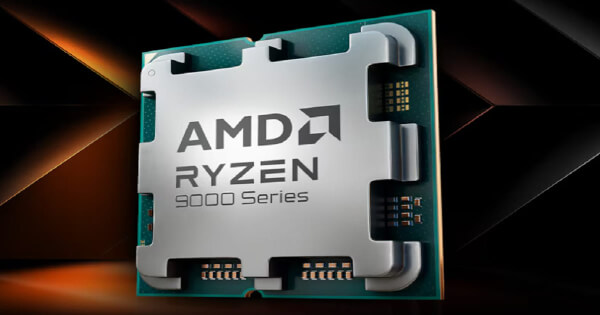
AMD’s Ryzen AI processors are proving their worth in gaming, enabling real-time, on-device voice chat moderation with zero reliance on cloud infrastructure. The new application, CtrlVox, uses the Neural Processing Unit (NPU) integrated into Ryzen AI chips to filter toxic voice chat in real time, without impacting frame rates or exposing user data to third parties.
Developed by Databiomes as a plugin for Unreal Engine, CtrlVox moderates harmful voice content in multiple languages directly on the player’s device. The technology eliminates the latency and privacy risks associated with cloud-based solutions, a long-standing hurdle for effective in-game communication management.
How Ryzen AI Hardware Advances Moderation
Ryzen AI processors, launched as part of AMD’s strategy to dominate local AI workloads, house dedicated NPUs designed for low-latency inference. This hardware architecture allows moderation to run independently of the CPU and GPU, ensuring no performance trade-offs in gaming environments. According to AMD, moderation decisions are processed in just 700 milliseconds, with a modest 120MB memory footprint.
Even on systems without Ryzen AI hardware, CtrlVox operates using the CPU, capped at 10% utilization. However, the addition of the NPU unlocks significant efficiency, preserving CPU and GPU resources for other gaming tasks. This approach aligns with AMD’s broader strategy to deliver AI-driven features directly on the chip, reducing cloud dependencies while enhancing privacy.
Real-World Demonstration and Industry Implications
CtrlVox made its live debut at Unreal Fest Chicago 2026, integrated into a custom multiplayer game, Vicious Mockery. Players experienced seamless moderation with no perceivable impact on gameplay. This demonstration highlights the practical viability of on-device AI in gaming, a segment where AMD is increasingly positioning itself as a leader.
Ryzen AI processors, first introduced in 2024, have steadily evolved to meet the demands of AI-driven applications. The latest Ryzen AI 400 and Ryzen AI Max PRO 400 Series processors, launched in 2026, cater to both commercial and high-performance computing markets. With up to 55 TOPS (trillions of operations per second) of NPU capacity, these chips are designed to handle complex AI workloads locally, from gaming to productivity tools like Microsoft Copilot.
AMD’s Competitive Edge in the AI PC Market
AMD’s focus on local AI acceleration places it in direct competition with Intel’s Core Ultra and Qualcomm’s Snapdragon X platforms, which also target high-end AI-enabled devices. However, AMD’s integration of NPUs into its Ryzen processors gives it a distinct advantage, particularly in gaming scenarios where performance and privacy are paramount.
Despite a broader industry slowdown in CPU shipments, AMD has been growing its market share, driven by innovations like Ryzen AI. As of August 31, 2026, AMD’s market cap stands at $780.92 billion, reflecting investor confidence in its AI-focused strategy.
Looking Ahead
With applications like CtrlVox demonstrating the capabilities of Ryzen AI hardware, AMD is positioning itself as a key enabler of safer, more immersive gaming experiences. Beyond gaming, the same technology could extend to enterprise tools, robotics, and more, as AMD continues to expand its Ryzen AI lineup. For developers and studios, the promise of real-time, on-device AI opens up new possibilities for innovation without the operational costs of cloud infrastructure.
Image source: Shutterstock


