
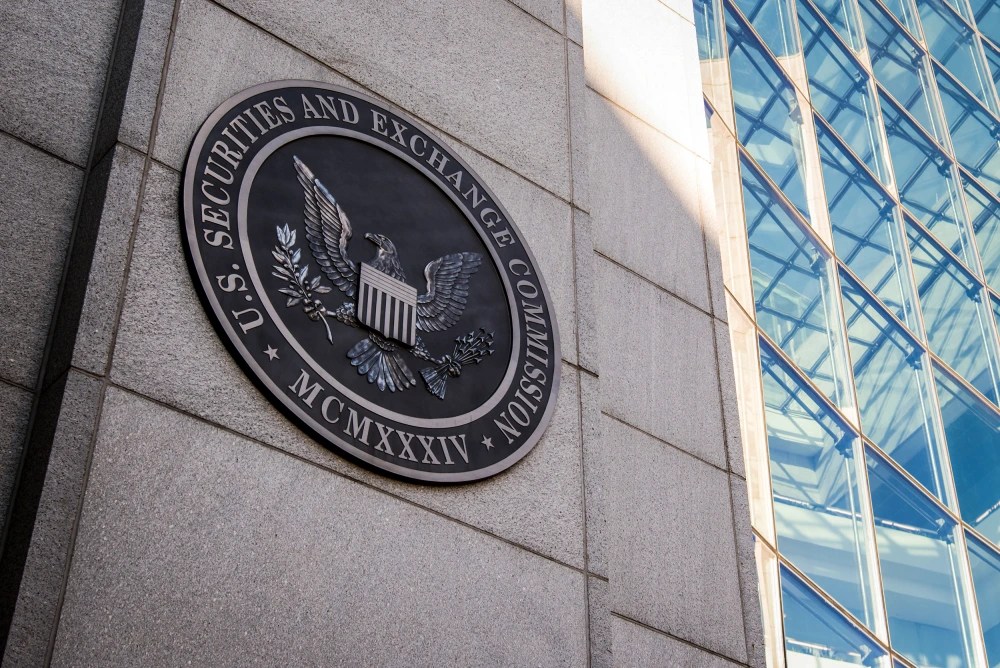
US SEC Issues Key Crypto Custody Guidelines For Broker-Dealers
In its latest effort to provide clearer regulatory clarity, the US Securities and Exchange Commission (SEC) has published detailed guidelines for broker-dealers on the custody of crypto assets.
SEC Clarifies Crypto Custody Standards For Broker-Dealers
On Wednesday, the SEC’s staff of the Division of Trading and Markets issued a statement addressed its views on the application of paragraph (b)(1) of Rule 15c3-3 to crypto assets that are considered securities, including tokenized versions of an equity or debt security.
Under Securities Exchange Act of 1934, Rule 15c3-3 requires any broker-dealer to “promptly obtain and thereafter maintain physical possession or control of all fully paid and excess margin securities it carries for the account of customers.”
The new guidelines clarify how “any broker-dealer that carries crypto asset securities for customers, including broker-dealers that conduct a traditional securities business” can maintain compliance with this rule despite tokens being on the blockchain.
According to the SEC’s statement, a broker-dealer can consider itself to have “physical possession” of the crypto assets if it has direct access to the asset and the capability to transfer it on the associated distributed ledger technology (DLT).
Broker-dealers must also conduct and document an throughout assessment “of the distributed ledger technology and the associated network where transfers of ownership of a crypto asset security are recorded prior to undertaking to maintain possession of the crypto asset security, and at reasonable intervals thereafter.”
In additions, they must establish, maintain, and enforce “reasonably designed written policies and procedures” to ensure the assets’ security, the protection of private keys, they have adequate plans to address unexpected disruptions to its possession of the crypto assets, including theft, unauthorized used, network attacks, and hard forks.
This circumstance emphasizes that a broker-dealer has policies, procedures, and controls reasonably designed to help ensure that no other person, including the broker-dealer’s customer or a third-party (including the broker-dealer’s affiliate), has access to the relevant private keys and the ability to transfer the asset without the authorization of the broker-dealer.
Meanwhile, the agency explained that “a broker-dealer does not deem itself to possess a crypto asset security if the broker-dealer is aware of any material security or operational problems or weaknesses with the distributed ledger technology and associated network used to access and transfer the crypto asset security or is aware of other material risks posed to the broker-dealer’s business by custodying the crypto asset security.”
SEC’s Path To Clearer Rules
The SEC affirmed that the statement is part of its efforts to provide greater clarity on the application of federal securities laws to crypto assets. Notably, the regulatory agency recently published guidelines to help educate retail investors about the ways they can hold crypto assets and is pushing to modernize its rules to facilitate an positive market environment.
Earlier this month, the US regulator revealed it is evaluating tokenization to modernize the issuance, trading, and settlement of public equities. SEC chairman Paul Atkins asserted that “Distributed ledger technology and the tokenization of financial assets, including securities, have the potential to transform our capital markets.”
Moreover, Atkins recently stated that the Commission could issue innovation exemption rules for crypto firms in early 2026. The agency has been considering the rule exemption since July to “permit novel ways of trading and more narrowly tailored forms of relief to facilitate the building of other components of a tokenized securities ecosystem.”
The change would allow crypto firms to quickly launch products without having to comply with “burdensome prescriptive regulatory requirements that hinder productive economic activity.” Instead, they would “be able to comply with certain principles-based conditions designed to achieve the core policy aims of the federal securities laws.”
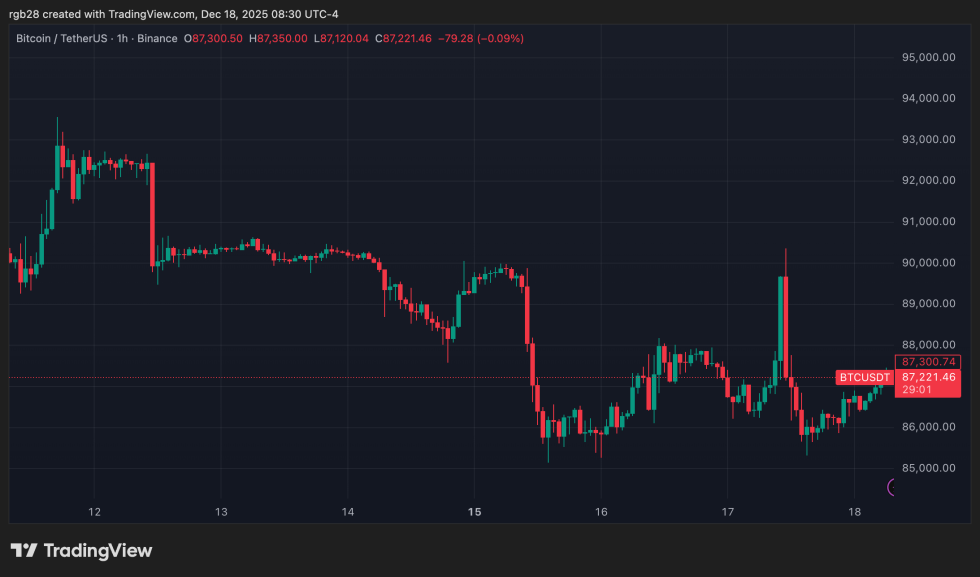
Bitcoin (BTC) trades at $87,221 in the one-week chart. Source: BTCUSDT on TradingView
Featured Image from NBC News, Chart from TradingView.com

Editorial Process for bitcoinist is centered on delivering thoroughly researched, accurate, and unbiased content. We uphold strict sourcing standards, and each page undergoes diligent review by our team of top technology experts and seasoned editors. This process ensures the integrity, relevance, and value of our content for our readers.


